
Abortion medications targeted by SC lawmakers at state, federal level
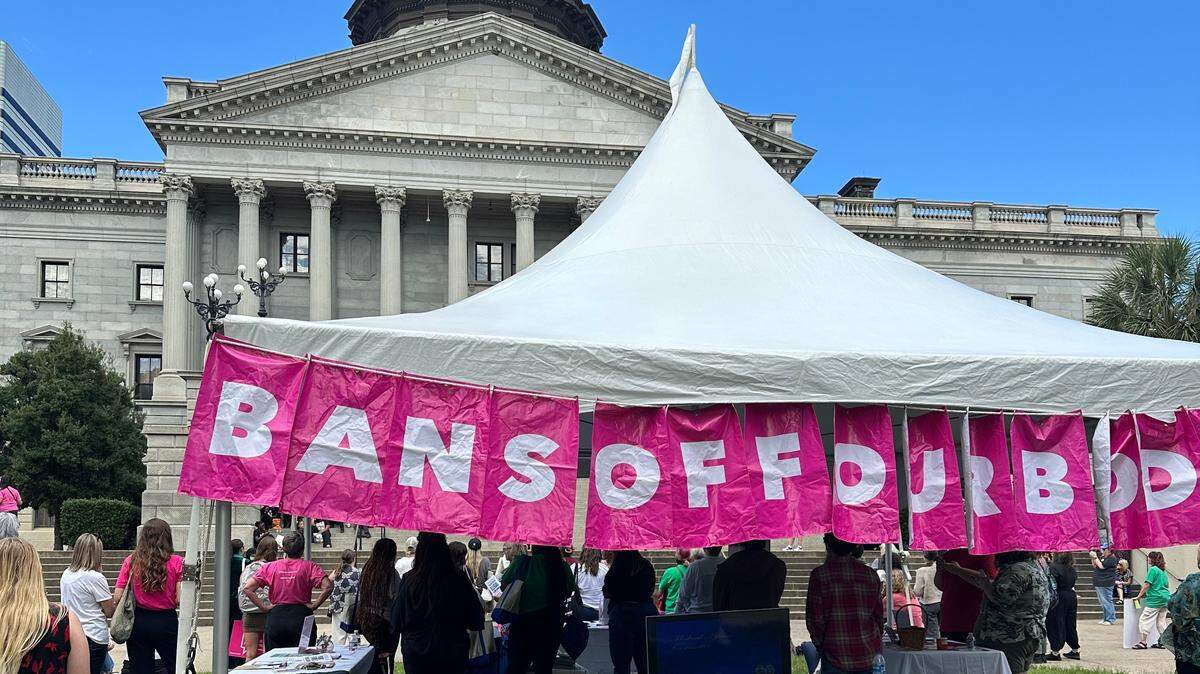
While South Carolina laws already curb access to medication intended to end pregnancies, state and federal efforts could further restrict the predominant way people have abortions in the state.
These efforts include:
- A bill to ban all abortions in South Carolina and make it a felony to end a pregnancy.
- Republican U.S. Senators, led by SC Sen. Lindsey Graham and signed by Sen. Tim Scott, asked the Food and Drug Administration to suspend approvals of generic abortion pills and a rule allowing clinicians to dispense medication virtually.
- Attorneys general across the country, including South Carolina’s Alan Wilson, have also asked Congress to bar states from allowing physicians to ship medication abortion across state lines without consequence.
- Federal courts are considering state challenges about whether looser restrictions imposed over the past decade by the Food and Drug Administration are legal.
If any are successful, it could change how and if South Carolinians have abortions. In 2024, about 84% of the 3,025 total abortions in South Carolina were administered with medication, according to state health data. The share of people receiving medication abortion has increased since South Carolina lawmakers passed a six-week abortion ban and Roe v. Wade was overturned. Data from reproductive rights research organizations predict thousands of South Carolinians not counted in state health data also receive abortion pills completely virtually.
A 2021 Food and Drug Administration decision allowing mifepristone to be prescribed and sent via telemedicine has drawn the ire of members of Congress and anti-abortion advocates. It opens the door for more people to access abortion, despite bans, they argue.
In a letter to the Food and Drug Administration, U.S. Republican lawmakers, led by Graham, asked for the agency to suspend approvals of generic mifepristone and a 2021 rule allowing the medication to be dispensed virtually. The letter highlighted two concerns: the safety of the medication and the dissatisfaction that telemedicine allowed doctors to administer abortions in states with bans.
“Unrestricted access to abortion pills is systematically undermining states’ rights and violating pro-life state laws,” the letter read.
There isn’t any evidence that medication abortions are dangerous, said Suzanne Bell, an associate professor at Johns Hopkins Bloomberg School of Public Health. Bell studies fertility, with interests in contraceptive use, abortion and infertility. She said the abortion pills can be more convenient and accessible than other methods to end a pregnancy.
In May, a coalition of 13 medical professional organizations, including the American College of Obstetricians and Gynecologists, wrote in a statement that the medication is safe and effective for patients.
“As more and more people use it globally, there continues to be a growing record of the safety of these pills that does not necessitate revisiting it,” Bell said.
“I think this is strictly a political move that is interfering with evidence-based science,” she continued.
Medication abortion typically consists of two pills: mifepristone and misoprostol. The medication has been approved by the Food and Drug Administration since 2000. Mifepristone blocks progesterone, a hormone that helps a fertilized egg develop during a pregnancy. Misoprostol helps with remove the “products of conception from the uterus” through contractions, Bell said.
If mifepristone is further restricted, medication abortions could still safely be administered using only misoprostol, Bell said.
What is the current law in SC?
South Carolinians must receive their medication abortion in person, rather than through telehealth, under state law. All abortions are also only legal up until a fetal heartbeat is detected, which is typically in the sixth week of pregnancy.
While South Carolina law bans virtually dispensing abortion drugs, the Society of Family Planning predicts physicians in other states prescribe mifepristone and misoprostol to people in states with bans. The Society of Family Planning is an abortion advocacy research group.
Even though South Carolina physicians cannot legally send mifepristone and misoprostol in the mail, doctors in some other states can. States without abortion bans, like New York and Massachusetts, have shield laws that let doctors send mifepristone across state lines. The Society of Family Planning’s #WeCount report predicts 3,890 abortions occurred in South Carolina in 2024 via virtual-only telehealth.
Some Republican attorneys general, including Wilson, have asked Congress to crack down on shield laws. Also, anti-abortion groups, lawmakers and states have pushed for FDA to reverse its rules on telemedicine. If the 2021 federal policy were changed, doctors in New York would not be able to prescribe medication for South Carolinians.
Missouri, Kansas and Idaho filed an amendment to a lawsuit earlier this year, where the Supreme Court initially said physicians lacked standing, challenging the FDA’s approval of mifepristone as a safe and effective drug.
In a press call Oct. 29, the Susan B. Anthony Pro-Life America, an anti-abortion advocacy group, asked Congress and the FDA to reverse rules allowing medication abortion to be prescribed via telemedicine.
“If a state passes a pro-life protection ... and then the pill starts swarming into that state again, with no protections for woman or child, then the laws that they pass at heartbeat are null and void,” said Marjorie Dannenfelser, president of Susan B. Anthony Pro-Life America.
The FDA’s telemedicine rule has made abortion more accessible for people in states with bans, but restrictions still stop some people, Bell said.
“Even with this increased access to medication abortion through telehealth options, that doesn’t mean that there is a future where no one will be impacted by these restrictions,” Bell said. “I think it just will continue to reduce the impact of those bans.”
The U.S. Senators and Susan B. Anthony Pro-Life America have also pushed for the FDA to study the safety of mifepristone before approving other versions of the drug. Bell said there was no evidence suggesting abortion medications needed to be restudied.
The approval of the generic mifepristone still frustrated anti-abortion groups, Kelsey Pritchard, a spokesperson for Susan B. Anthony Pro-Life America, said.
“This move that the FDA made, it is not MAGA, it is not MAHA,” Pritchard said. “Adding a new life-ending drug to the market doesn’t make America greater or healthier, and it’s completely inconsistent with their promises to study the safety of mifepristone.”
What does the proposed SC law do?
A proposal in South Carolina would ban all abortions, without exceptions for rape, incest or fatal fetal anomalies. Abortions would only be permitted if the life of the pregnant woman is at risk.
If passed as written, the person with the terminated pregnancy could face felony charges, a policy change that has drawn criticism from both sides of the abortion debate. The pregnant person is shielded from legal repercussions under the current abortion ban.
“It brings back punishment for women all the way around,” said Vicki Ringer, the director of Planned Parenthood South Atlantic. “To possess pills, to order pills, to tell somebody how to buy pills, everything surrounding an abortion is illegal under [Senate Bill] 323.”
It would also make it illegal to prescribe for, deliver or sell medications to a pregnant woman with the intent to cause an abortion.
A Senate subcommittee heard hours of testimony on the bill in early October. Another subcommittee hearing on the bill will be held next week, Tuesday, Nov. 18.